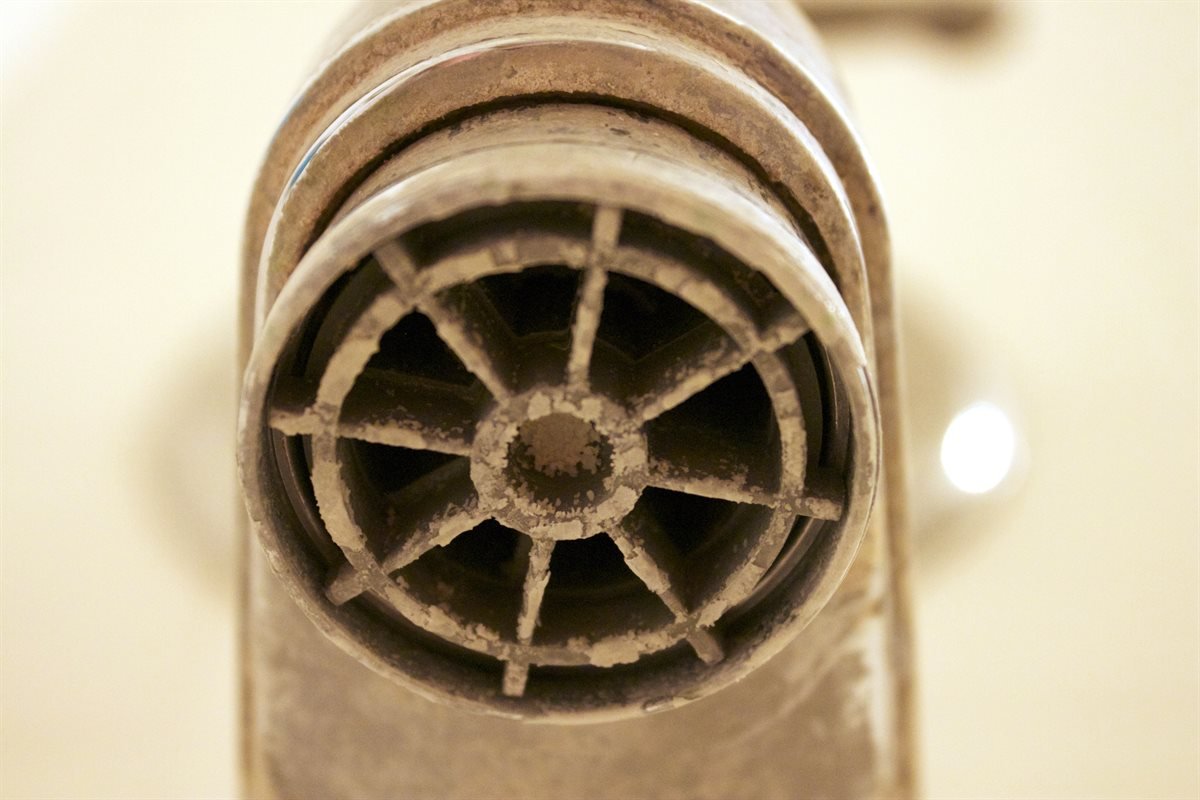
Every homeowner in Simi Valley is familiar with the persistent white chalky rings around faucets, the cloudy haze clinging to freshly washed dishes, and the faint chemical odor that occasionally greets you when pouring a glass of tap water. Between regional mineral-rich aquifers and municipal disinfection treatments, our local water supply presents distinct challenges that standard plumbing simply isn't equipped to handle on its own.
When property owners decide to take action, they frequently ask our team at BT Plumbing CO the same fundamental question: "Do I need a water softener, or should I install a water filtration system?"
While these two terms are often used interchangeably in casual conversation, they perform entirely different functions. A water softener addresses dissolved rock minerals that physically destroy household pipes and appliances, whereas a water filtration system targets chemical contaminants, chlorine disinfectants, sediment, and volatile organic compounds (VOCs) that affect taste, odor, and health.
In this authoritative Simi Valley homeowner guide, our team compares how each technology operates, evaluates local water testing reports from the City of Simi Valley and Golden State Water Company, and provides clear criteria so you can choose the optimal water treatment setup for your household.
💡 The Core Difference in 30 Seconds
- Water Softeners: Use ion-exchange or crystallization to remove or neutralize dissolved calcium and magnesium minerals. Their main mission is protecting water heaters, dishwashers, faucets, and supply pipes from destructive limescale accumulation.
- Water Filtration Systems: Use carbon media, sediment barriers, or reverse osmosis membranes to remove chlorine, chloramines, pesticides, heavy metals, microplastics, and VOCs. Their main mission is providing pure, great-tasting, chemical-free drinking and bathing water.
In extreme hardness environments like Simi Valley (where mineral hardness regularly exceeds 15 to 28+ GPG), installing a dedicated whole-home water filtration and softener system often delivers the best balance of mechanical plumbing defense and pure drinking water.
Understanding Simi Valley's Unique Water Profile
To understand why both systems are popular in Ventura County, you have to look at where Simi Valley's tap water originates. Our municipal water is managed by two primary water purveyors:
- City of Simi Valley Waterworks District No. 8: Serving roughly 60% of the city, including central, western, and northern neighborhoods.
- Golden State Water Company (Simi Valley District): Serving the remaining 40%, primarily across eastern portions of the valley.
Both entities import the majority of their water from the Calleguas Municipal Water District (which blends State Water Project water from Northern California and Colorado River Aqueduct water). Crucially, this imported surface water is blended with deep local groundwater wells throughout the year.
As water percolates through deep regional subterranean limestone, dolomite, and mineral strata, it dissolves immense amounts of calcium bicarbonate and magnesium sulfate. According to local annual Consumer Confidence Reports, Simi Valley water hardness ranges between 260 and 480+ parts per million (ppm), or roughly 15 to 28+ grains per gallon (GPG).
The United States Geological Survey (USGS) classifies anything over 10.5 GPG as "Very Hard." That means Simi Valley water is more than double the threshold for severe hardness. At the same time, municipal utilities add chlorine and chloramines to eliminate microbial pathogens during delivery, leaving residents with water that is simultaneously scale-producing and chemically scented.
What Does a Water Softener Do? (Appliance & Pipe Defense)
A traditional water softener is an ion-exchange appliance designed specifically to strip out dissolved calcium (Ca2+) and magnesium (Mg2+) ions before water enters your plumbing branch lines.
How an Ion-Exchange Softener Operates
Incoming hard water enters a mineral tank filled with thousands of tiny, food-grade polystyrene resin beads charged with sodium or potassium ions. Because calcium and magnesium carry a stronger positive electrical charge than sodium, the resin beads attract and trap the mineral ions, releasing an equivalent trace amount of sodium into the water.
Periodically (typically every few days or after processing a designated volume of water), the unit runs a regeneration cycle: a concentrated salt brine solution flushes over the resin bed, stripping the trapped calcium into the drain line and re-charging the beads for continuous operation.
Plumbing Systems Protected by a Water Softener
Without a water softener, hard minerals precipitate out of solution whenever water is heated or depressurized, forming rock-hard calcite scale that silently damages your home:
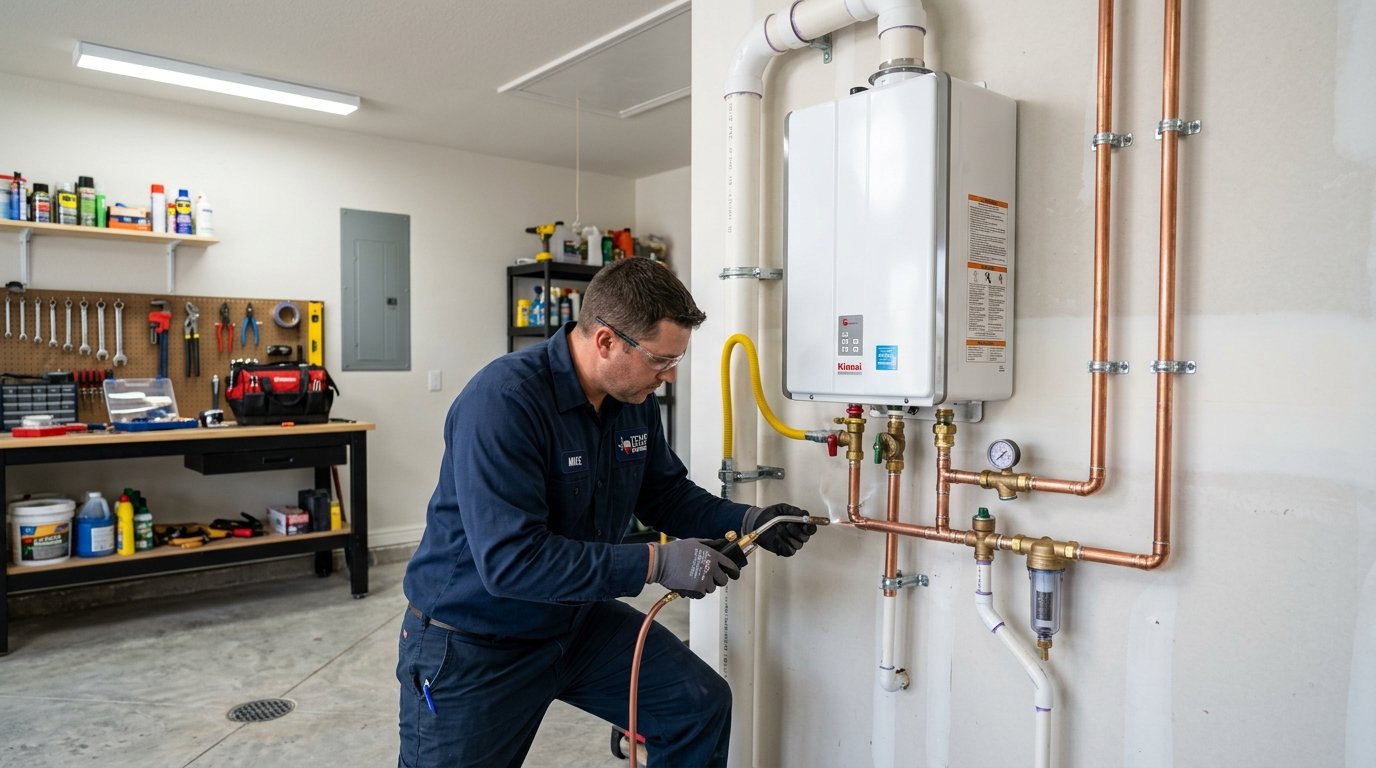
- Water Heaters: Scale builds up on heating elements and tank floors, acting as a thermal insulator. Just 1/8 inch of scale forces your system to consume 25% to 30% more energy to heat water, leading to overheating and premature tank rupture. Regular maintenance and timely water heater installation and repair are crucial if your tank is already rumbling or suffering from calcification.
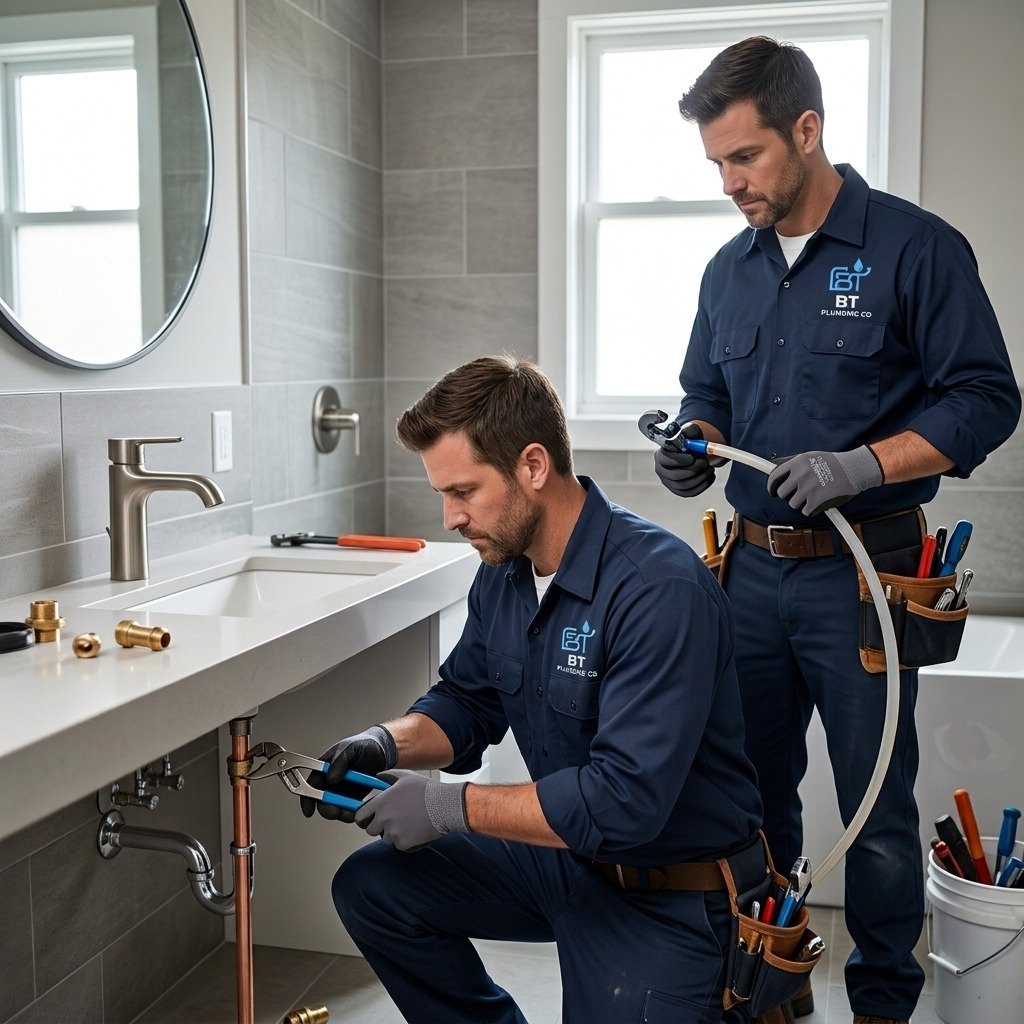
- Fixtures & Valves: Mineral crystals tear through rubber O-rings and ceramic disc cartridges inside designer faucets, leading to drips, leaks, and frozen shutoffs. Our specialists handle complete faucet, sink, and shower plumbing restoration when scale ruins fixture internals.
- Pipes & Water Pressure: Mineral scaling narrows the internal diameter of copper and galvanized pipes over the decades. In severe cases, the resulting turbulent flow and pitting corrosion cause slab leaks, requiring extensive whole-home repiping and pipe replacement to restore safe structural flow.
Pros & Cons of Water Softeners
Advantages of Water Softeners
Completely stops limescale; extends water heater lifespan by 5–8 years; eliminates spotty dishes and stiff laundry; cuts soap and detergent usage by up to 50%; leaves skin soft and hair manageable.
Limitations of Water Softeners
Does NOT remove chlorine, chloramines, chemicals, pesticides, or heavy metals; requires adding salt pellets every 6–8 weeks; produces minor brine wastewater during regeneration; slightly elevates sodium levels in tap water.
What Does a Water Filtration System Do? (Health & Purity)
Unlike water softeners, water filtration systems do not alter the mineral hardness of water. Instead, they pass water through physical and chemical media barriers to capture or neutralize harmful impurities, biological contaminants, and unpleasant tastes or odors.
Common Filtration Technologies for Simi Valley Homes
- Whole-House Activated Carbon / Catalytic Carbon: Installed at the main water inlet, these multi-stage media tanks excel at absorbing chlorine, chloramines, volatile organic compounds (VOCs), trihalomethanes (disinfection byproducts), and foul odors, delivering crisp, bottled-quality water to every tap, shower, and hose bib.
- Sediment Pre-Filters: 5-micron to 20-micron spun polypropylene filters catch silt, rust flakes, sand, and pipe debris, shielding sensitive downstream valves and cartridges.
- Point-of-Use Reverse Osmosis (RO): Typically mounted under the kitchen sink, an RO system forces water under pressure through a semi-permeable membrane with pores as small as 0.0001 microns. It strips up to 99% of total dissolved solids (TDS), including nitrates, fluoride, arsenic, lead, microplastics, and emerging PFAS "forever chemicals."
Pros & Cons of Water Filtration
Advantages of Water Filtration
Removes bad tastes and pungent chlorine smells; filters out toxic heavy metals, PFAS, and chemical runoff; eliminates drying shower chemicals; delivers pure drinking water directly from the tap without plastic bottles.
Limitations of Water Filtration
Standard whole-house carbon filters DO NOT soften water or stop limescale buildup; calcium and magnesium ions pass freely through carbon media, leaving your water heater, dishwasher, and pipes unprotected.
Comprehensive Comparison: Water Softener vs. Water Filtration
To help you quickly determine which technology addresses your immediate household concerns, here is a detailed side-by-side breakdown:
| Feature / Benefit | Ion-Exchange Water Softener | Whole-House Carbon Filtration | Under-Sink Reverse Osmosis (RO) |
|---|---|---|---|
| Primary Purpose | Eliminate mineral scale and hardness | Remove chlorine, chemicals, and odor | Ultra-pure drinking & cooking water |
| Removes Calcium & Magnesium? | Yes (100% removal) | No (Minerals pass through) | Yes (95%+ TDS reduction) |
| Removes Chlorine & Chloramines? | No | Yes (Superior absorption) | Yes (Multi-stage carbon blocks) |
| Protects Water Heaters & Pipes? | Maximum protection | Minimal (sediment only) | No (Only filters 1 dedicated tap) |
| Coverage Scope | Whole home (all hot and cold lines) | Whole home (all taps and showers) | Point-of-use (Kitchen sink / fridge) |
| Improves Dishware & Laundry? | Eliminates spots, softens fabrics | No noticeable effect on spots | N/A (Drinking water only) |
| Maintenance Required | Add salt pellets every 6–8 weeks | Replace filter cartridges every 1–2 yrs | Replace filters annually; membrane 3 yrs |
| Simi Valley Recommendation | Essential for plumbing preservation | Highly recommended for chlorine | Best for pristine kitchen drinking |
How Water Hardness Directly Impacts Simi Valley Drainage & Slab Leaks
Many Ventura County residents are surprised to learn that water hardness causes expensive issues far beyond faucets and water heaters. In fact, hard water chemistry is an underlying contributor to two of the most disruptive plumbing emergencies we encounter:
1. Sticky Soap Curd & Chronic Drain Clogs
When hard calcium and magnesium ions interact with fatty acids in bar soaps, shampoos, and dishwashing detergents, they form an insoluble, waxy precipitate known as calcium stearate (soap curd). Unlike soft water soap lather that rinses smoothly away, soap curd clings tenaciously to the walls of bathroom drain branches and p-traps.
Over time, this sticky film catches loose hair, lint, and food solids like industrial glue, causing chronic slow drains and stubborn sewer backups. When off-the-shelf caustic chemical cleaners fail or corrode your metal drain fittings, calling for professional drain cleaning and clog clearing with motorized augers or hydro-jetters is the only safe remedy.
2. Under-Slab Pinhole Leaks in Copper Lines
Simi Valley's suburban expansion in the 1970s, 80s, and 90s saw thousands of homes built on concrete slab foundations with Type M or Type L copper water piping buried underneath. High mineral content combined with variable pH and municipal disinfectants can trigger localized electrolytic pitting corrosion inside copper tubing.
Microscopic pinholes eventually penetrate the pipe wall, discharging pressurized water beneath your foundation. Because these leaks are buried under concrete, they often go unnoticed until flooring buckles, water bills skyrocket, or water meter dials spin continuously. Our licensed technicians utilize non-destructive electronic leak detection and pipe repair gear to locate the exact subterranean breach without demolishing your living space.
Which System Should You Choose for Your Simi Valley Home?
Determining the right investment comes down to identifying which issues bother you most and evaluating your budget:
Scenario 1: Choose a Water Softener If...
- Your primary frustration is chalky limescale on shower doors, faucets, tile, and dishes.
- You have installed a new tank or tankless water heater and want to preserve its manufacturer warranty and energy efficiency.
- Your family struggles with dry, irritated skin or brittle hair after taking hot showers.
- You want to protect copper or PEX plumbing lines and high-end fixtures from costly scale buildup.
Scenario 2: Choose a Whole-House Water Filter If...
- Your primary concern is the chemical smell, chlorinated taste, or aesthetic clarity of your municipal water.
- You are worried about long-term exposure to disinfection byproducts, pesticides, microplastics, or VOCs during daily showers and baths.
- You do not want to carry or refill heavy salt bags, or you prefer a system with zero wastewater discharge.
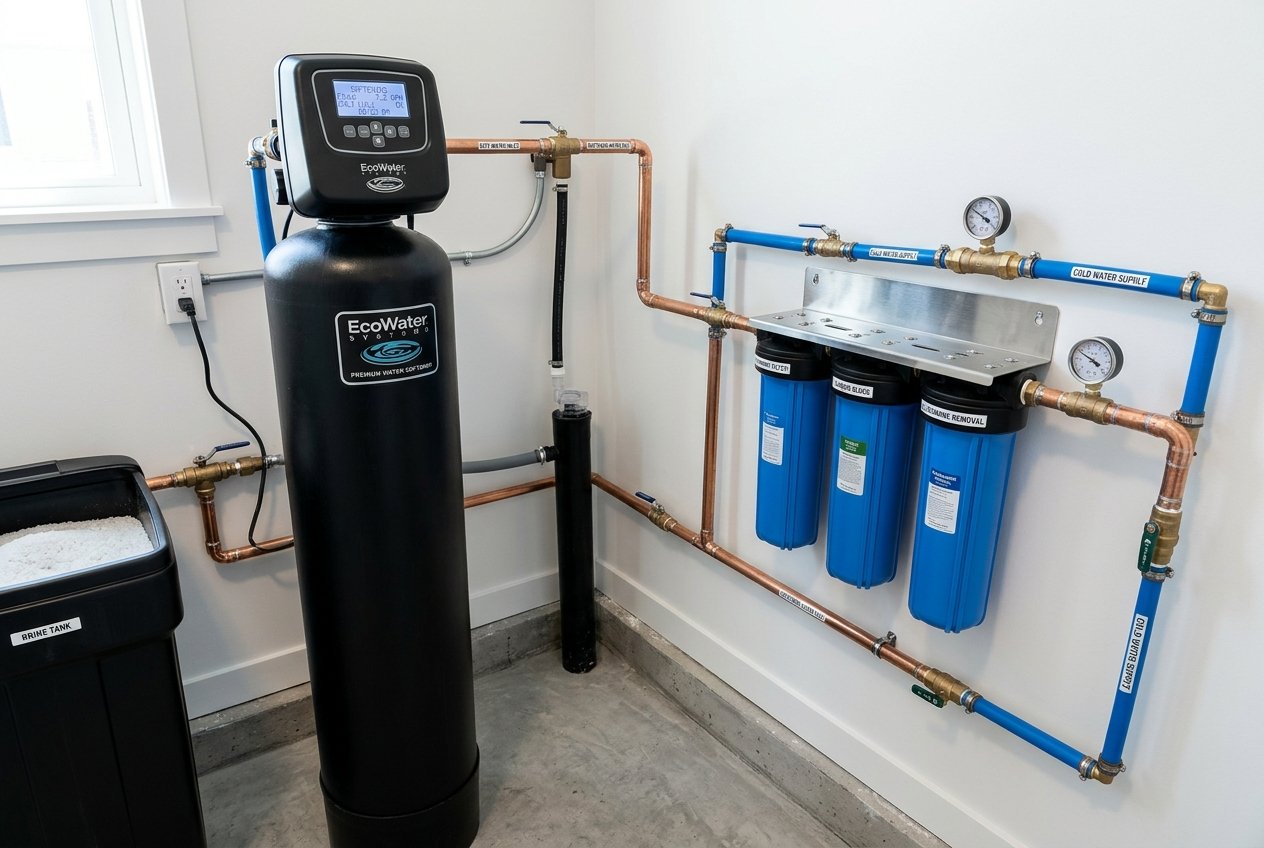
Scenario 3: The Ultimate Simi Valley Solution (The Dual Hybrid System)
Because Simi Valley water is both exceptionally hard (15–28+ GPG) and treated with chlorine disinfectants, choosing only one system often leaves half the problem unaddressed.
The gold standard for Ventura County homeowners is a complete dual-treatment setup:
- Stage 1 (Whole-House Carbon Filtration): Removes chlorine, chloramines, sediment, and chemicals right at the main shutoff, improving bathing comfort and protecting downstream water softener resin beads from oxidative chlorine damage.
- Stage 2 (Demand-Initiated Ion-Exchange Softener): Strips out calcium and magnesium, ensuring soft water flows through every water heater, appliance, and pipe.
- Optional Stage 3 (Kitchen Reverse Osmosis): Installed under the kitchen sink to produce pristine, 99% pure drinking water for coffee, cooking, and infant formula.
Get a Custom Water Quality Evaluation in Simi Valley, CA
Not sure which system fits your plumbing layout and budget? Connect with our licensed water treatment specialists at BT Plumbing CO. We provide professional on-site hardness testing, transparent upfront estimates, and manufacturer-certified installations.
Ventura County Softener Regulations: What You Must Know
A common misconception among local residents is that water softeners are outlawed across Southern California. In reality, California Health and Safety Code Section 116786 and local regional sanitation districts only regulate older, inefficient timer-based softeners that discharge brine indiscriminately into municipal sewers.
Modern Demand-Initiated Regeneration (DIR) water softeners are 100% legal in Simi Valley. DIR systems utilize intelligent digital water meters to regenerate only after treating a specific number of gallons, cutting salt usage by up to 40% and wastewater by up to 50%. Our team exclusively installs California-certified, high-efficiency DIR equipment meeting all Ventura County standards.
Frequently Asked Questions: Water Softeners vs. Filtration
Can a whole-house carbon filter soften Simi Valley water?
No. Carbon filters are engineered to absorb chemical contaminants, chlorine, chloramines, VOCs, and unpleasant odors. Dissolved calcium and magnesium minerals are in a liquid ionic state and pass freely through carbon pores. To eliminate hard water scale and spotty dishes, you need an ion-exchange water softener or a template-assisted crystallization (TAC) conditioner.
Does softened water taste salty?
No. During ion-exchange softening, sodium is exchanged at a molecular ratio. In typical Simi Valley hard water, softened water contains roughly 20 to 35 mg of sodium per 8-ounce glass—about the same as a single slice of white bread. It does not taste salty. However, for homeowners on medically restricted low-sodium diets or who prefer zero added sodium, potassium chloride pellets can be used in the brine tank, or an under-sink reverse osmosis system can be installed for drinking water.
Which system is more critical for protecting my water heater?
A water softener is vastly more important for water heater longevity. Hard water scale creates a thick insulating blanket on heat exchangers and tank bottoms, increasing energy bills by up to 30% and causing premature tank failure. A water filter does not stop limescale formation inside water heaters.
How often do water softeners and filtration systems need service in Simi Valley?
Water softeners require checking and refilling the salt or potassium brine tank every 6 to 8 weeks, plus an annual valve inspection. Whole-house sediment and carbon filter cartridges typically need replacement every 12 to 24 months, depending on household water consumption and municipal sediment levels.
Can I install a water softener and filtration system together?
Yes, this is the recommended gold standard for Simi Valley homes. Installing a whole-house carbon filter upstream from your water softener removes harsh chlorine and chloramines first, which protects the softener's sensitive resin beads from chemical degradation and dramatically extends the softener's lifespan while giving you soft, chemical-free water at every fixture.